
Table of Contents
- Create Your Cleanout Plan and Timeline
- Estate Cleanout Checklist: What to Do First
- Sort Your Items: Keep, Donate, Discard Strategy
- How Long Does a Whole House Cleanout Take?
- Safety Precautions and Protective Gear
- Hiring Professional Junk Removal Services
- Budget for Your Home Cleanout Costs
- Room-by-Room Decluttering Strategy
- Frequently Asked Questions
Last Updated: September 23, 2026
Create Your Cleanout Plan and Timeline
Learning how to prepare for home cleanout starts with establishing a realistic plan and timeline. Without structure, the project becomes overwhelming and often stalls midway through. Start by assessing the total square footage you need to clear, the types of items involved, and your physical ability to handle heavy lifting. A typical single-family home cleanout can range from a few days to several weeks depending on the volume of belongings and the level of sorting required.
Break your project into phases. Rather than attempting an entire house at once, tackle one room or zone every few days. This prevents burnout and allows you to make thoughtful decisions about what stays and what goes. Assign specific deadlines to each area, and be honest about how much time you can realistically dedicate each week. If you work full-time, weekends may be your primary window. If you're managing an estate cleanout, you might have more flexibility but also more emotional weight to process.
Consider external factors that affect your timeline. Weather matters if you're moving items outside for pickup or donation. Seasonal demand for junk removal services fluctuates, so booking early ensures availability. If you're selling the property or need the space urgently, factor that deadline into your planning. Load & Leave can help accelerate this timeline with same-day service availability, allowing you to move at your own pace.
Document your plan in writing. A simple spreadsheet or checklist that maps rooms to target dates keeps you accountable and gives you visible progress as you complete sections. Include notes about items requiring special handling, like hazardous materials or antiques needing appraisal.
Estate Cleanout Checklist: What to Do First
Begin with a comprehensive inventory of what you're dealing with. Walk through the entire property and note high-level categories: furniture, appliances, personal belongings, documents, and miscellaneous items. This initial survey takes a few hours but prevents surprises later. Photograph valuable items for insurance or appraisal purposes if needed.
Next, secure critical documents and valuables. Set aside a dedicated box for legal papers, financial records, and sentimental items that require careful handling. This prevents accidental disposal of irreplaceable documents during the sorting process. Many people discover important paperwork mixed in with general clutter, so this step is essential before large-scale removal begins.
Create zones within your space: one for items to keep, one for donations, one for items to discard, and one for special handling (e-waste, hazardous materials, items for sale). Having physical separation prevents confusion and makes the sorting process more efficient. Label each zone clearly so anyone helping you understands the system.
Address utilities and access early. If you're clearing a property you no longer occupy, arrange for utilities to remain active during the cleanout process. Ensure removal services can access the property easily, clear pathways, unlock gates, and notify neighbors if necessary to maintain discretion. Load & Leave prioritizes floor protection and discreet removal.
Notify relevant parties. If you're an executor managing an estate, inform beneficiaries of the timeline and ask about items they want to claim. If you're a landlord clearing a rental unit, document the property's condition before and after with photos. This protects you legally and creates a clear record of the cleanout process.
Sort Your Items: Keep, Donate, Discard Strategy
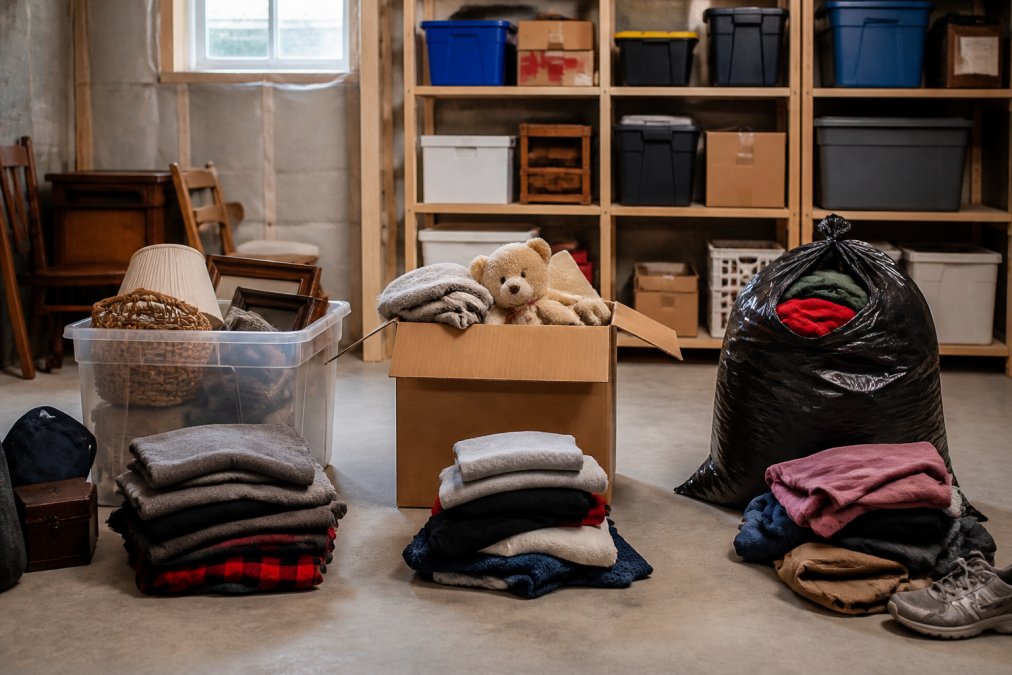
The sorting phase determines what leaves your home and what stays. Use a simple three-category system: keep, donate, and discard. Items you keep should have genuine utility or irreplaceable sentimental value. Be ruthless here. If you haven't used something in two years and it doesn't spark joy or serve a purpose, it's taking up space unnecessarily.
Donations are items in good condition that others can use. Furniture, clothing, books, and household goods find new homes through charities, thrift stores, or donation centers. Many organizations offer free pickup for large items, which saves you removal costs. Keep a running list of donation items and their estimated values for tax deduction purposes if applicable. Tax-deductible donations can offset some of your cleanout expenses, though you'll need itemized documentation from the receiving organization.
Discard items are broken, worn out, or unusable.
Handling Legal Documents and Sensitive Paperwork
Legal documents demand special attention during a cleanout. Gather all important papers: wills, deeds, mortgage documents, insurance policies, tax returns, and investment statements. Store these securely, either in a safe deposit box or with an attorney if you're managing an estate. Do not discard originals, keep them permanently.
Managing Digital Estate and E-Waste
Electronics represent a growing portion of home cleanouts. Computers, monitors, printers, phones, and tablets contain valuable materials and hazardous substances. E-waste cannot go in regular trash, it requires specialized recycling through certified e-waste processors. Many retailers offer mail-in recycling programs, and local waste management facilities often have e-waste collection days.
How Long Does a Whole House Cleanout Take?
Understanding how to prepare for home cleanout means accounting for several variables: total square footage, volume of belongings, level of sorting required, and available labor. A typical single-family home with moderate clutter takes two to four weeks if you're working alone on weekends. Homes with significant accumulation or extensive sorting needs may require six to eight weeks.
Safety Precautions and Protective Gear
Cleanouts expose you to physical hazards and potentially dangerous materials. Protect yourself with proper equipment. Heavy-duty work gloves prevent cuts and splinters when handling rough materials. A dust mask or respirator protects against mold spores, dust, and airborne particles, especially in basements and attics that haven't been disturbed in years.
Hiring Professional Junk Removal Services
Professional removal services handle the physical labor and logistics, freeing you to focus on sorting and decision-making. When evaluating services, ask about their process: Do they sort items for donation and recycling, or do they send everything to landfill? Do they protect your floors and walls during removal? Can they handle specialty items like pianos, antiques, or hazardous materials?
Understanding Disposal Regulations and Hazardous Waste
Disposal regulations vary by location but follow general principles. Regular household waste goes to licensed landfills. Recyclables must be sorted and processed through certified recycling facilities. Hazardous materials, paint, batteries, electronics, chemicals, require specialized disposal through certified hazardous waste processors.
Budget for Your Home Cleanout Costs
Cleanout costs break into several categories: removal services, donations, recycling, hazardous waste disposal, and miscellaneous supplies. Removal is typically the largest expense, varying based on volume and complexity. Custom quotes from professional services reflect your specific situation rather than generic pricing.
Room-by-Room Decluttering Strategy
Tackle rooms strategically rather than randomly. Start with low-emotion spaces like hallways, bathrooms, and utility rooms. Success in these areas builds momentum and confidence. Move to moderate-emotion spaces like kitchens and living rooms next. Save bedrooms and personal spaces for last when you've developed sorting skills and emotional resilience.
Frequently Asked Questions
What is the 5-5-5 rule for decluttering?
The 5-5-5 rule helps you sort efficiently: identify 5 items you definitely keep, 5 items to donate, and 5 items to discard in each session. This structured approach prevents decision fatigue and creates measurable progress. Many people find this rhythm sustainable for tackling multiple rooms during a home cleanout without becoming overwhelmed by the volume of decisions required.
What should I remove first when preparing for a home cleanout?
Start with items that take up the most space but hold the least emotional weight: bulky furniture, appliances, and storage boxes. Remove these first to open up your space and build momentum. Save sentimental items and personal belongings for later stages when you have more mental clarity and can make thoughtful decisions about what truly matters to keep.
How do I create an effective estate cleanout checklist?
Your estate cleanout checklist should include: inventorying all rooms, identifying hazardous materials, sorting documents and financial records, photographing valuable items for appraisal, contacting donation centers for pickup, scheduling utility disconnections, and arranging for bulk item disposal. Break it into phases by room to stay organized. Include tasks like securing important paperwork, notifying beneficiaries, and arranging for professional help if needed.
What's the actual difference between renting a dumpster and hiring professional junk removal services?
Dumpster rental requires you to load items yourself and pay by size, while professional junk removal services handle the heavy lifting, sorting, and disposal for you. Junk removal offers more convenience and expertise in handling hazardous waste, fragile items, and recycling. For estate cleanouts with heavy furniture, antiques, or sensitive items, professional services provide discretion and proper handling.
How long does a whole house cleanout typically take?
A complete house cleanout depends on size and contents. A small home with minimal clutter may take 1-2 weeks with daily effort. A full estate cleanout with multiple rooms, heavy furniture, and sentimental sorting can take 4-8 weeks. Professional teams can accelerate the timeline significantly with proper inventory management and debris removal coordination.
How do I handle tax-deductible donations during my cleanout?
Keep detailed records of all donated items with descriptions and estimated values. Photograph items before donation and request receipts from charitable organizations. Consult IRS guidelines for fair market value estimates. Group similar items together for easier valuation. Work with donation centers that provide itemized receipts. Tax-deductible donations can offset cleanout costs, so documentation is essential for your records and tax filing.
What should I do with hazardous materials during a home cleanout?
Hazardous waste includes paint, chemicals, batteries, electronics, and fluorescent bulbs. Never mix these with regular trash. Contact your local waste management facility for hazardous waste collection days or drop-off locations. Some items like old appliances may require special handling for refrigerant recovery. Professional junk removal services understand disposal regulations and can handle these materials safely and legally.
A successful home cleanout requires planning, systematic sorting, and honest decision-making about what stays in your life. The process is as much emotional as it is physical, you're not just removing items, you're clarifying your space and your priorities. Load & Leave removes the physical burden, handling heavy lifting and disposal logistics so you can focus on the meaningful work of deciding what matters. When you're ready to move forward, get a free quote and let our team handle the rest.
Frequently asked questions
The 5-5-5 rule helps you sort efficiently: identify 5 items you definitely keep, 5 items to donate, and 5 items to discard in each session. This structured approach prevents decision fatigue and creates measurable progress. Many people find this rhythm sustainable for tackling multiple rooms during a home cleanout without becoming overwhelmed by the volume of decisions required.
Start with items that take up the most space but hold the least emotional weight: bulky furniture, appliances, and storage boxes. Remove these first to open up your space and build momentum. Save sentimental items and personal belongings for later stages when you have more mental clarity and can make thoughtful decisions about what truly matters to keep.
Your estate cleanout checklist should include: inventorying all rooms, identifying hazardous materials, sorting documents and financial records, photographing valuable items for appraisal, contacting donation centers for pickup, scheduling utility disconnections, and arranging for bulk item disposal. Break it into phases by room to stay organized. Include tasks like securing important paperwork, notifying beneficiaries, and arranging for professional help if needed.
Dumpster rental requires you to load items yourself and pay by size, while professional junk removal services handle the heavy lifting, sorting, and disposal for you. Junk removal offers more convenience and expertise in handling hazardous waste, fragile items, and recycling. For estate cleanouts with heavy furniture, antiques, or sensitive items, professional services provide discretion and proper handling.
A complete house cleanout depends on size and contents. A small home with minimal clutter may take 1-2 weeks with daily effort. A full estate cleanout with multiple rooms, heavy furniture, and sentimental sorting can take 4-8 weeks. Professional teams can accelerate the timeline significantly with proper inventory management and debris removal coordination.
Keep detailed records of all donated items with descriptions and estimated values. Photograph items before donation and request receipts from charitable organizations. Consult IRS guidelines for fair market value estimates. Group similar items together for easier valuation. Work with donation centers that provide itemized receipts. Tax-deductible donations can offset cleanout costs, so documentation is essential for your records and tax filing.
Hazardous waste includes paint, chemicals, batteries, electronics, and fluorescent bulbs. Never mix these with regular trash. Contact your local waste management facility for hazardous waste collection days or drop-off locations. Some items like old appliances may require special handling for refrigerant recovery. Professional junk removal services understand disposal regulations and can handle these materials safely and legally.