Table of Contents
- Why Discretion Matters in Estate Clearance
- Step 1: Sort and Categorize Items Before Removal
- Step 2: Create an Estate Cleanout Checklist
- Step 3: Identify Valuable and Sentimental Keepsakes
- Step 4: Handle Sensitive Documents in Estates Properly
- Step 5: Arrange Professional Estate Cleanout Services
- Step 6: Manage Timeline and Final Walkthrough
- Common Mistakes to Avoid During Estate Clearance
- Frequently Asked Questions
Last Updated: September 28, 2026
Why Discretion Matters in Estate Clearance
Estate clearance is overwhelming, sorting decades of memories while managing logistics, emotions, and family dynamics. When you need to clear estate junk discreetly, privacy matters: neighbors' attention, family reputation, and maintaining dignity during a sensitive time.
Discretion controls the narrative around your property transition. Professional teams that prioritize confidentiality avoid disruption from multiple trucks, visible debris, and neighbor questions. Load & Leave specializes in this, efficient, respectful, and private.
This guide covers sorting strategies, handling sensitive documents, arranging professional services, and managing the emotional weight, giving you a clear action plan to move forward with confidence.
Step 1: Sort and Categorize Items Before Removal
Create four main piles:
- Keep: Items with genuine sentimental or financial value
- Donate: Usable goods in decent condition
- Recycle: Materials that can be processed (metals, paper, glass)
- Discard: Everything else, damaged goods, hazardous waste, items nobody wants

Start with one room at a time. Set a timer for focused 90-minute sessions, then take a break, this prevents burnout and careless decisions.
Emotional attachment clouds judgment. Ask: Would I buy this today? If no, it goes. This mental shift makes sorting faster and less painful.
Keep detailed notes: what's in each pile, item count, and special handling needs. Professional removal services give faster, more accurate quotes with this information.
Step 2: Create an Estate Cleanout Checklist
Here's what your checklist should include:
- Identify and remove hazardous materials (paint, chemicals, old batteries)
- Locate and secure important documents (deeds, insurance papers, financial records)
- Take photos of valuable items for insurance or estate documentation
- Contact professional removal services for quotes
- Schedule removal date with buffer time before property deadline
- Arrange donation pickups for usable goods
- Set aside items for family members with clear labels
- Research recycling facilities for specific materials
- Deep clean after removal is complete
- Final walkthrough and documentation
Print and check off items as you complete them, seeing progress builds motivation.
Work backward from your deadline. Build in buffer time for unexpected complications.
Step 3: Identify Valuable and Sentimental Keepsakes
Some items have real monetary value; others have irreplaceable emotional worth. Identifying these before removal prevents costly mistakes.
Start with obvious candidates: jewelry, watches, collectibles, artwork, antiques, quality furniture, working electronics, and vintage items. Take photos and post on specialized forums or send to appraisers, a quick photo can reveal whether an item is worthless or worth hundreds.
Be selective with sentimental items. Keep one meaningful piece per category, then photograph the rest. Digital copies preserve memories without consuming space.
Set a deadline for family to claim items. Make it clear: if they don't collect by the date, items go. This prevents endless delays and resentment.
Label everything claimed by family members with their name and contact information. Use color-coded stickers or tags. When removal day arrives, professional teams need to know instantly what stays and what goes.
Step 4: Handle Sensitive Documents in Estates Properly
Financial records, medical files, and personal correspondence require careful handling. Improper disposal creates identity theft risk, violates privacy, and exposes you to legal liability.
Before removal day, locate and secure:
- Bank statements and financial records
- Insurance documents and policies
- Medical records and prescriptions
- Legal documents (wills, deeds, contracts, titles)
- Personal correspondence and journals
- Tax returns and government forms
- Charitable donation receipts and valuations
Document Retention for Legal Compliance
Federal law and state probate codes require retention of certain records: tax returns (7 years minimum), deeds and property records (permanently), wills and probate documents (indefinitely), insurance policies (until claims settled), and investment statements (3 years after closure).
Create a fireproof storage box or encrypted digital archive for documents you're keeping. Label by category and date. Maintain an inventory of what you're retaining and why, this protects you legally.
Tax Deductions and Charitable Donations
Proper documentation of donations to qualified charities can generate tax deductions. Use IRS Form 8283, obtain written acknowledgment from the charity, take photos and create an itemized list with fair market values, and keep all documentation with your tax return. High-value items should be professionally appraised.
Secure Destruction of Sensitive Papers
Shred sensitive documents using a cross-cut shredder or burn safely if local regulations permit. For large volumes, hire a certified document destruction service (the FTC). They provide chain-of-custody documentation and certification of destruction.
Digital Documents and Online Accounts
Secure email and cloud accounts by changing passwords and downloading important files. Notify banks and credit card companies of death. Use platform legacy options for social media. Back up important files before deleting anything. Keep a master list of all online accounts and closure dates.
Step 5: Arrange Professional Estate Cleanout Services
When contacting removal services, be specific about your needs:
- Total volume (rough estimate is fine, "three bedrooms of furniture")
- Specific items requiring special handling (pianos, antiques, hazardous materials)
- Timeline and deadline pressure
- Discretion requirements and privacy concerns
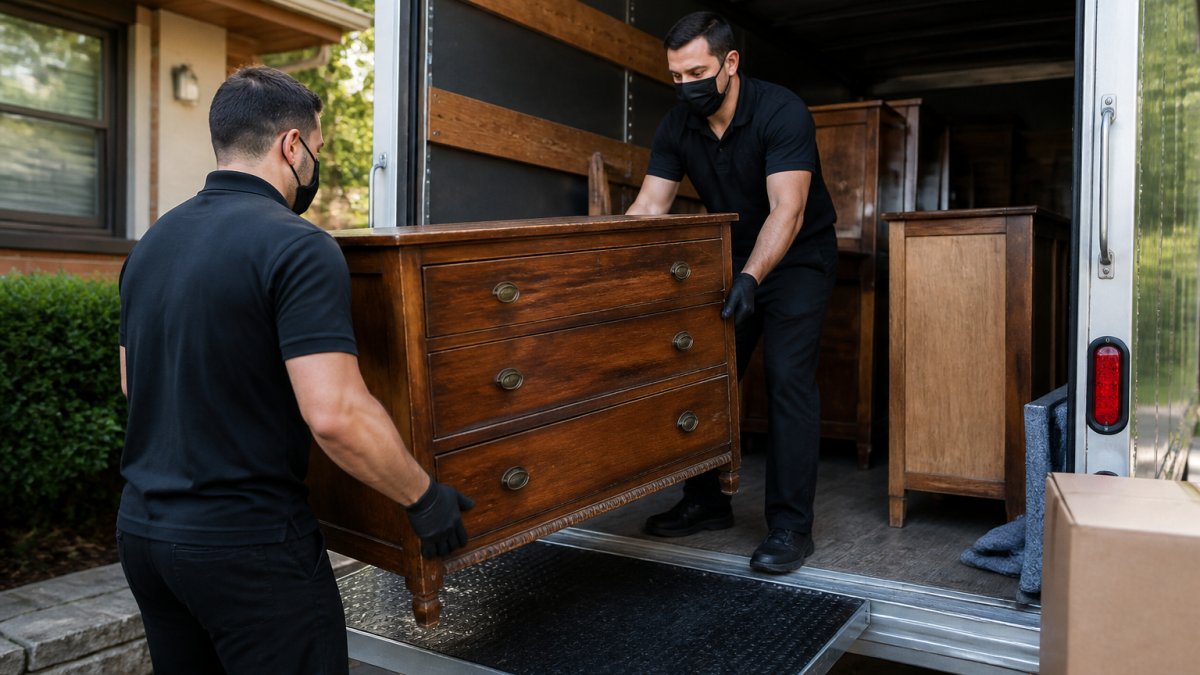
Professional teams understand sensitive situations, work quickly, maintain confidentiality, and protect your property. Load & Leave provides transparent quotes with no hidden fees, same-day availability, and direct communication with owners to address your specific concerns.
Ask potential services about their disposal practices. Where do items go? Do they donate usable goods? Recycle materials responsibly? This matters if you care about environmental impact or want documentation for tax deductions on charitable donations.
Get everything in writing. Know the exact date, time window, and what's included. Confirm they have proper insurance in case anything gets damaged. Ask about their process for protecting your property, floor coverings, careful handling, cleanup afterward.
Step 6: Manage Timeline and Final Walkthrough
Estate clearance has deadlines. You're selling the house, settling the estate, or managing probate timelines. Missing dates costs money and creates stress.
Work backward from your deadline. If you need the property cleared by November 15th, schedule removal services for early November. This gives you buffer time for unexpected delays.
A few days before removal, do a final walkthrough with your checklist. Confirm:
- All family items have been collected or clearly labeled
- Valuable items are secured or set aside
- Hazardous materials are removed
- Documents are secured
- Donation items are ready for pickup
On removal day, be present or have a trusted representative on-site.
Common Mistakes to Avoid During Estate Clearance
Learning from others' mistakes saves time, money, and stress. Here are the pitfalls most people encounter, and how to avoid them.
Underestimating the Emotional Toll and Family Conflict
Family conflict typically arises in three scenarios:
- Disagreement over what has value. One sibling sees a piece of furniture as worthless; another sees it as irreplaceable. Without a framework for deciding, you're stuck.
- Unequal emotional attachment. One family member wants to keep everything "just in case." Another wants it gone immediately. These timelines clash.
- Perceived unfairness in distribution. If some family members claim items and others don't, resentment builds. The person managing the clearance feels responsible for managing expectations.
To prevent conflict:
- Set a clear deadline for family claims. Announce it in writing (email or text) to all stakeholders: "You have until [date] to claim items. Anything not claimed by then will be donated or discarded." Stick to the deadline. Flexibility here creates endless delays and resentment.
- Create a simple claim process. Ask family members to send a list or photos of items they want. Don't allow vague claims ("I might want something from the bedroom"). Require specific items. This prevents arguments later.
- Document decisions in writing. If you agree that one sibling gets the china cabinet and another gets the desk, write it down and share it. This prevents "I thought we agreed..." conflicts later.
- Separate emotional items from the clearance process. If certain items have deep sentimental value to multiple family members, address those separately before the bulk removal. Don't let one disputed item hold up the entire project.
- Use a neutral third party if needed. If family conflict is severe, hire a professional estate mediator or have a trusted family friend facilitate decisions. This removes you from the role of "bad guy" making unpopular calls.
- Acknowledge grief explicitly. Don't pretend this is just a cleanup project. Say: "This is hard. We're all processing loss while making practical decisions. Let's be patient with each other." This reframes conflict as normal, not a sign of family dysfunction.
Waiting Too Long to Sort
Keeping Too Much
Ignoring Valuable Items
Failing to Secure Documents
Choosing the Wrong Removal Service
Not Communicating with Family
Missing the Deadline
Forgetting the Final Walkthrough
Frequently Asked Questions
What are the main steps involved in clearing estate junk discreetly?
The process involves sorting items into categories (keep, donate, recycle, discard), creating an estate cleanout checklist to track progress, identifying valuable or sentimental keepsakes, securing sensitive documents, hiring professional services, and conducting a final walkthrough. Working with a discreet removal service ensures privacy throughout. Each step requires planning and attention to detail to handle the emotional and logistical aspects of estate clearance.
How do I handle sensitive documents during an estate cleanout?
Sensitive documents require secure, separate handling. Identify financial records, legal documents, medical files, and personal correspondence before the main clearout begins. Store these in a locked container and process them separately, shred or securely destroy personal information, file important legal documents with an attorney, and archive necessary financial records. Never dispose of sensitive documents in regular trash or donation bins. Professional estate cleanout services understand confidentiality protocols and can advise on proper document handling.
What disposal methods work best for estate junk while maintaining privacy?
Multiple disposal methods protect privacy: donation to charities keeps items out of landfills and provides tax deductions; recycling protocols handle materials responsibly; professional junk removal services haul items discreetly with scheduled, after-hours pickups; and specialty disposal handles hazardous materials safely. Avoid public drop-offs or visible curb placement. Professional services manage all logistics behind the scenes, ensuring neighbors don't witness the full scope of the estate clearance, which is especially important in sensitive situations.
How long does a typical estate cleanout take?
Timeline depends on property size, item quantity, and complexity. Planning ahead, sorting items, securing documents, and scheduling services, accelerates the process. Professional estate cleanout services often offer same-day availability for time-sensitive situations like property sales or transitions. Creating a detailed timeline and checklist helps coordinate family involvement, hiring, and final walkthrough inspections efficiently.
Frequently asked questions
The process involves sorting items into categories (keep, donate, recycle, discard), creating an estate cleanout checklist to track progress, identifying valuable or sentimental keepsakes, securing sensitive documents, hiring professional services, and conducting a final walkthrough. Working with a discreet removal service ensures privacy throughout. Each step requires planning and attention to detail to handle the emotional and logistical aspects of estate clearance.
Sensitive documents require secure, separate handling. Identify financial records, legal documents, medical files, and personal correspondence before the main clearout begins. Store these in a locked container and process them separately—shred or securely destroy personal information, file important legal documents with an attorney, and archive necessary financial records. Never dispose of sensitive documents in regular trash or donation bins. Professional estate cleanout services understand confidentiality protocols and can advise on proper document handling.
Multiple disposal methods protect privacy: donation to charities keeps items out of landfills and provides tax deductions; recycling protocols handle materials responsibly; professional junk removal services haul items discreetly with scheduled, after-hours pickups; and specialty disposal handles hazardous materials safely. Avoid public drop-offs or visible curb placement. Professional services manage all logistics behind the scenes, ensuring neighbors don't witness the full scope of the estate clearance, which is especially important in sensitive situations.
Timeline depends on property size, item quantity, and complexity. Planning ahead—sorting items, securing documents, and scheduling services—accelerates the process. Professional estate cleanout services often offer same-day availability for time-sensitive situations like property sales or transitions. Creating a detailed timeline and checklist helps coordinate family involvement, hiring, and final walkthrough inspections efficiently.